
How to Remove Wine, Oil and Wax from a Printed Tablecloth
Blot a fresh drink spill, lift excess food from an oily mark and let candle wax harden before you touch it. For all three, check the care label before adding water, applying a product or using heat.
The first minute: protect the table and check the label
Move the glass or candle away. If the spill has soaked through, lift that part of the tablecloth and protect the surface underneath. Use a clean white absorbent cloth to lift the liquid without dragging it across the pattern. Change to a clean part of the cloth as it takes up the spill. Pick up solid food separately; grinding crumbs into the weave makes more work later.
These steps are for a modern, washable tablecloth. Read the label on the item you own, not the one for a different fabric in the same collection. Washing, drying and ironing are separate decisions. The instructions describe what the cloth tolerates, not the amount of heat you must use. GINETEX explains the care symbols. If the label is missing or says professional clean only, stop after lifting the loose spill and ask a professional. Take the same caution with heirloom prints or fragile trims. The Smithsonian's conservation guidance explains why older textiles should not be treated like modern ones.
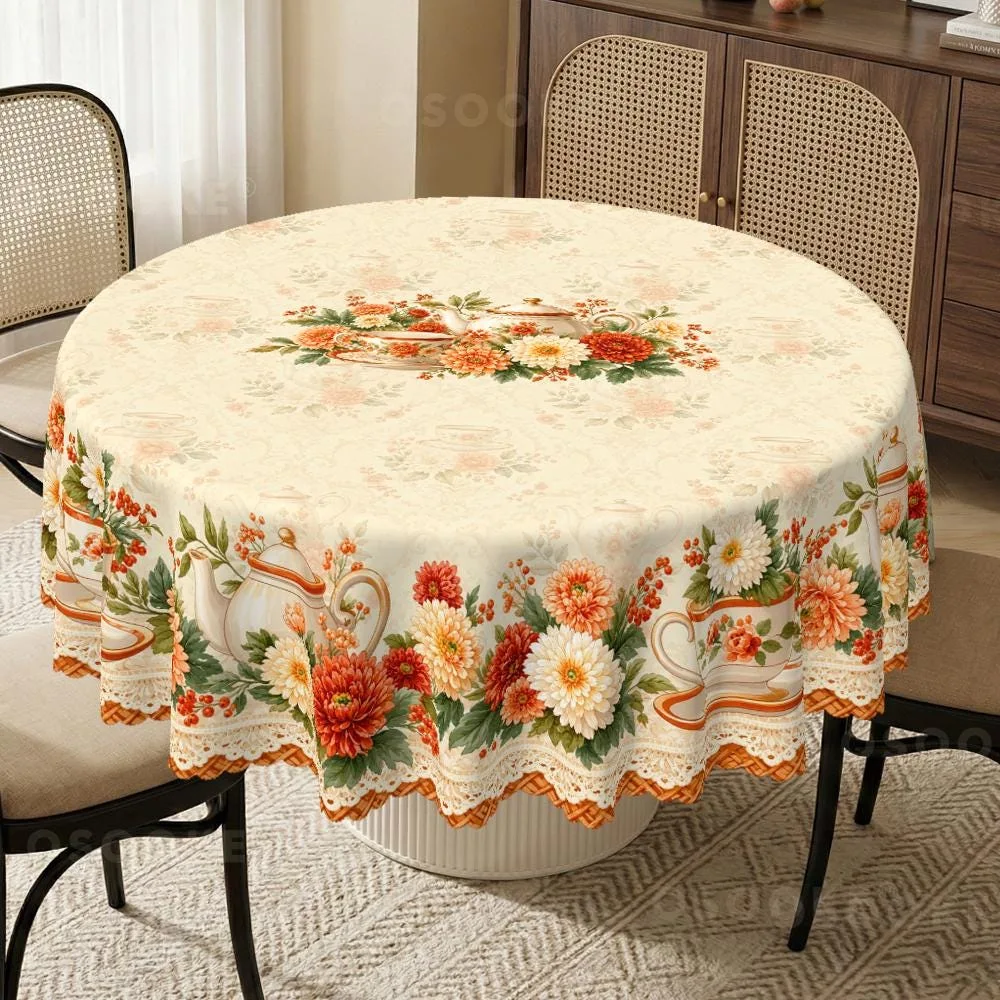
Check the darkest part of the print first
On a light-ground print such as the Autumn Tea Party Tablecloth, a spot can cross from pale ground into a dark detail. If home treatment is allowed, try the intended treatment on an inconspicuous area first, following its label, and check for colour transfer to a white cloth. Stop if the print changes or transfers. A pale patch behaving well does not tell you how the darkest area of the print will respond.
Red wine: lift the liquid before washing
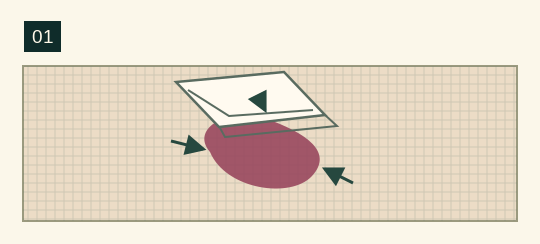
Work from the outside of the mark inwards so each press stays inside the spill. If water is allowed, sponge or soak the marked area in cool water before washing as directed. The American Cleaning Institute's holiday stain guide groups wine with other beverage stains for this kind of treatment. Start with cool water, not a kettle, and do not add another chemical simply because the mark is red.
Tea and coffee without milk can be approached like a drink spill. If the drink contained cream, tell the cleaner or check a treatment labelled for the mixed stain instead of assuming the same steps will do the whole job.
Oil and gravy: treat the greasy part before the wash
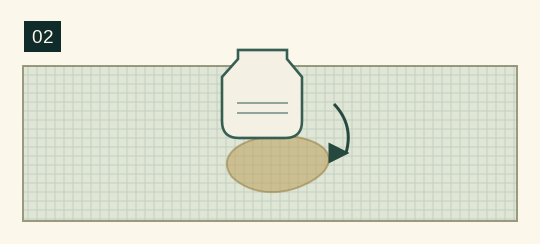
Lift loose sauce or butter with the edge of a spoon, then blot what remains. For a cloth that can be washed, use a laundry pre-treatment labelled for oily stains and safe for that fabric and colour. Follow its directions for contact time. Do not let the product dry in the print unless its label specifically allows it. Wash according to the cloth's label.
Look at the area from the side under ordinary light before drying. A translucent shadow can be harder to see while the rest of the cloth is wet. ACI's guidance on greasy dinner stains recommends checking before the dryer because heat can set a remaining mark. Where the care label allows it, air drying helps you see whether another suitable treatment is needed without adding dryer heat.
Candle wax: lift the solid first
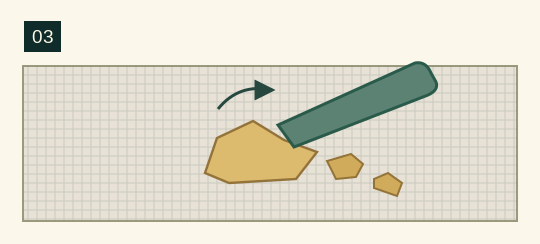
Move the candle and let the wax become completely solid. If the weave permits, lift loose pieces gently with a blunt edge, not a knife. Stop if the cloth pulls with the wax. Coloured wax can leave an oily shadow or a dye mark after the visible pieces are gone. Work out what remains before treating it.
Some general wax instructions use a warm iron and absorbent paper. This is not a default method for printed tablecloths. Do not iron a cloth that prohibits it or an unknown print, coating or trim. For embedded wax or a remaining coloured mark, ask the maker or a professional cleaner before adding heat. Identify the candle colour and anything already applied so they do not have to guess.
Before drying: inspect the original spot
- Use only the wash, drying and ironing methods permitted for the item.
- Check the stained patch and its reverse for a darker ring, colour transfer or wax still caught in the weave.
- If the stain remains, pause before using a dryer or iron. Do not combine treatments or apply stronger products at random.
Keep reading
What does the fabric name tell you?
See how fibre, fabric construction and the print method each affect what you can expect from a tablecloth.